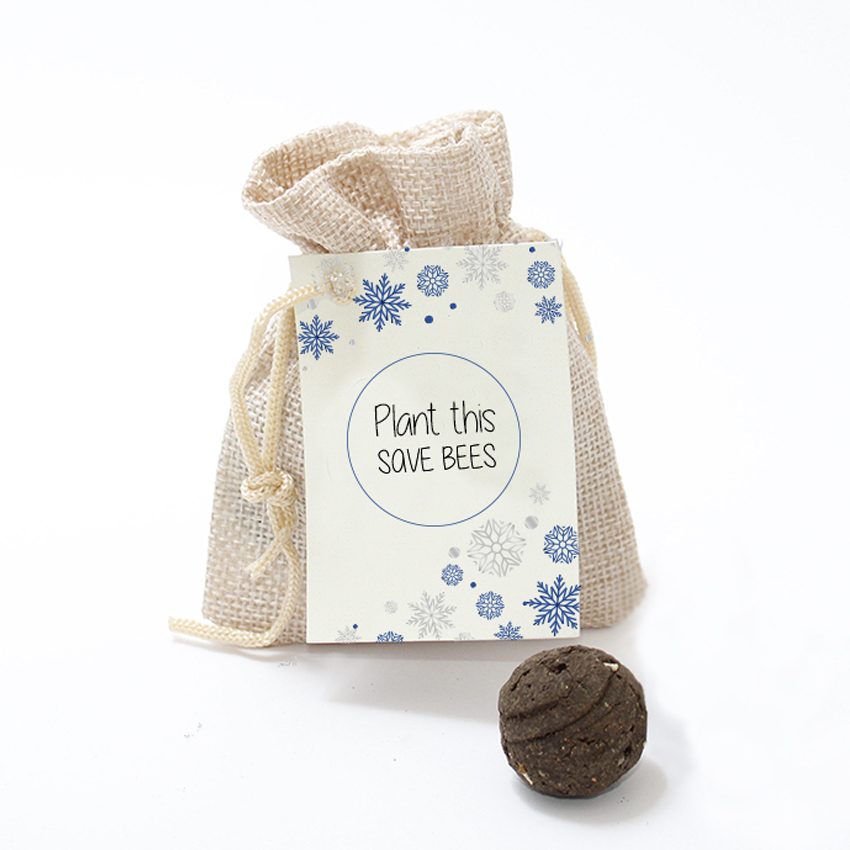
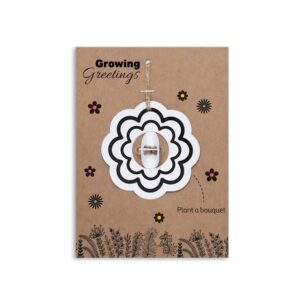
A seed ball contains seeds of bee forage plants and humus. It makes a growing gift with instructions and branded packaging. The exact seed mix is confirmed for the selected product.
Which packaging to choose
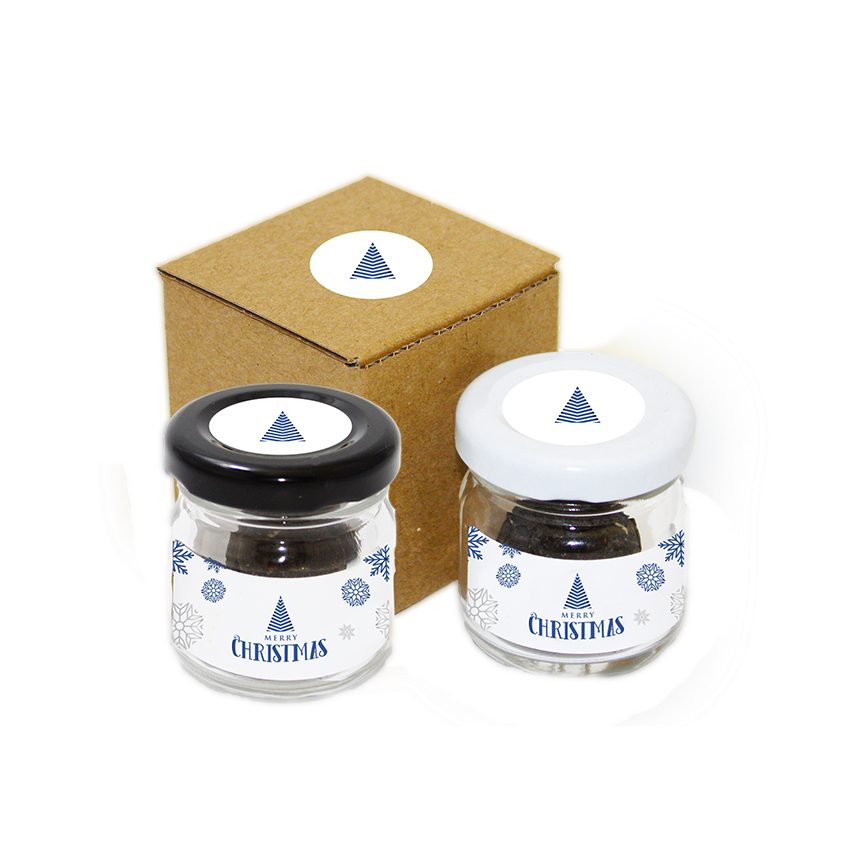
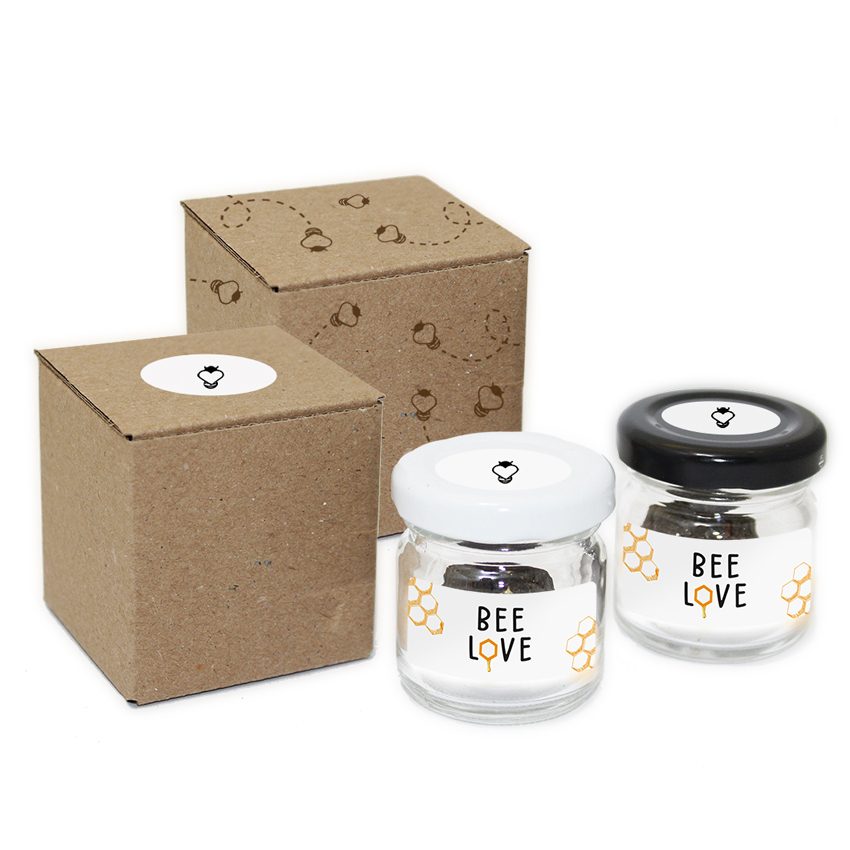
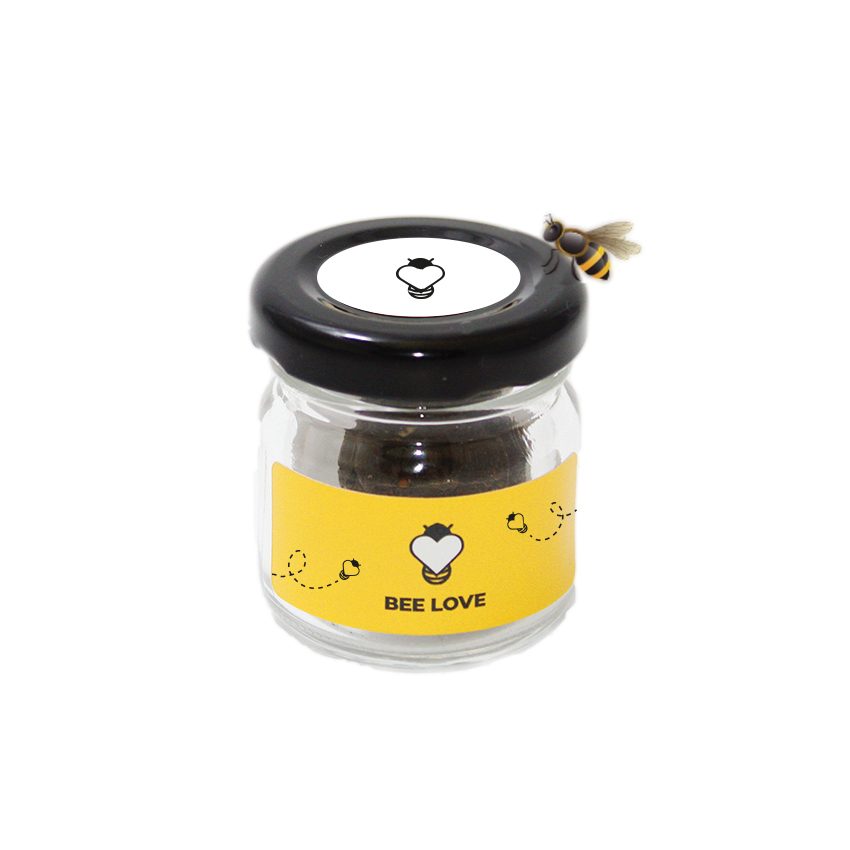
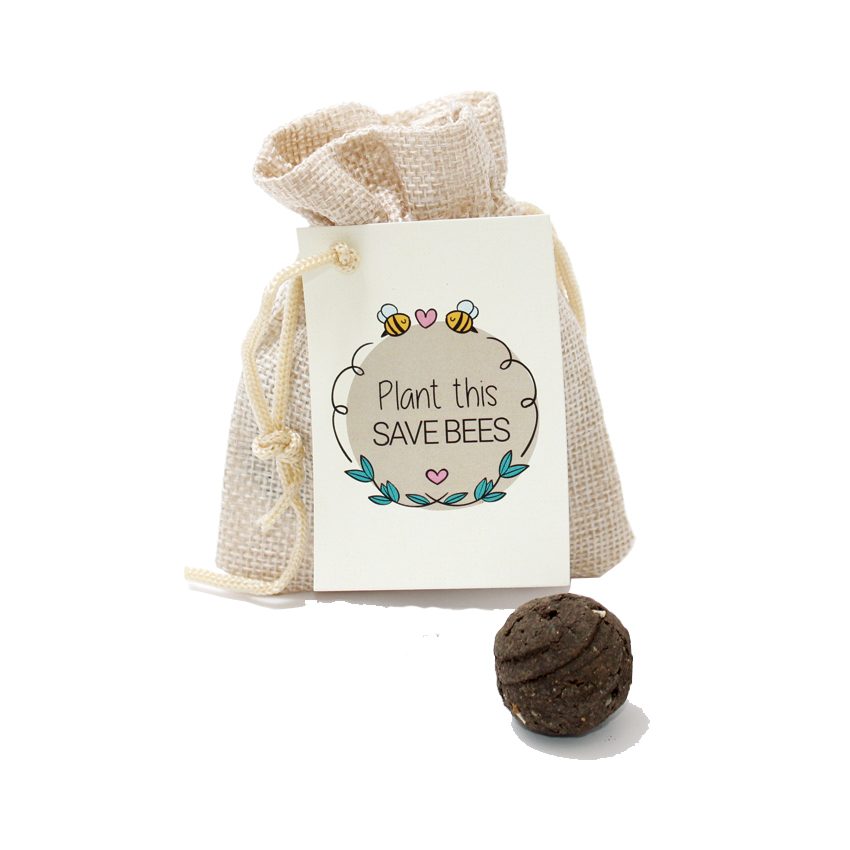
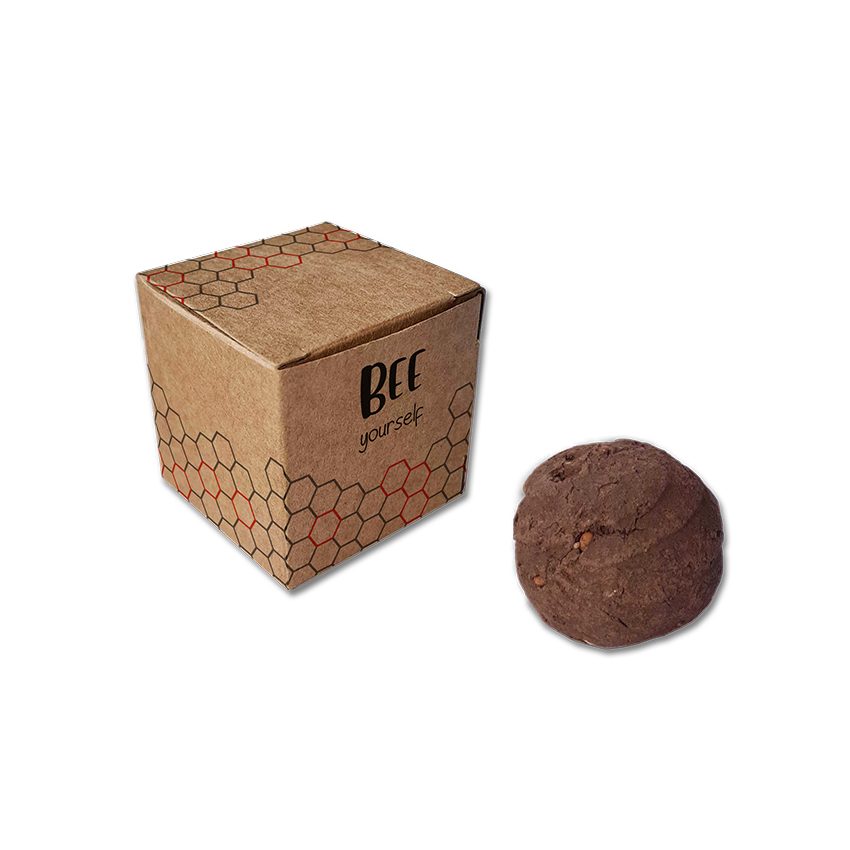
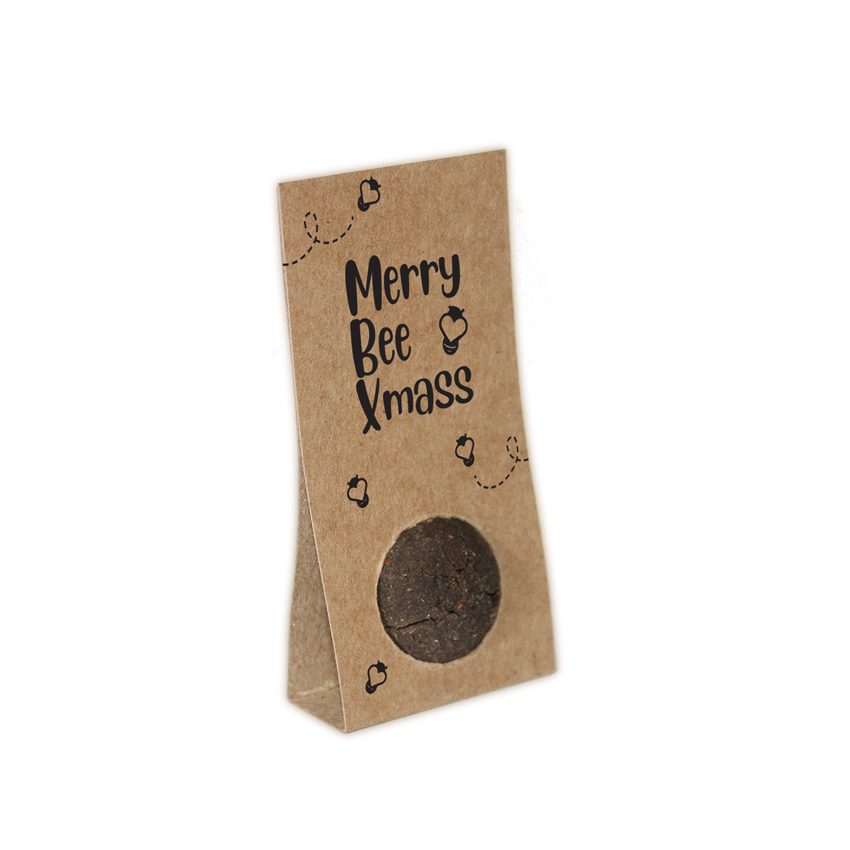
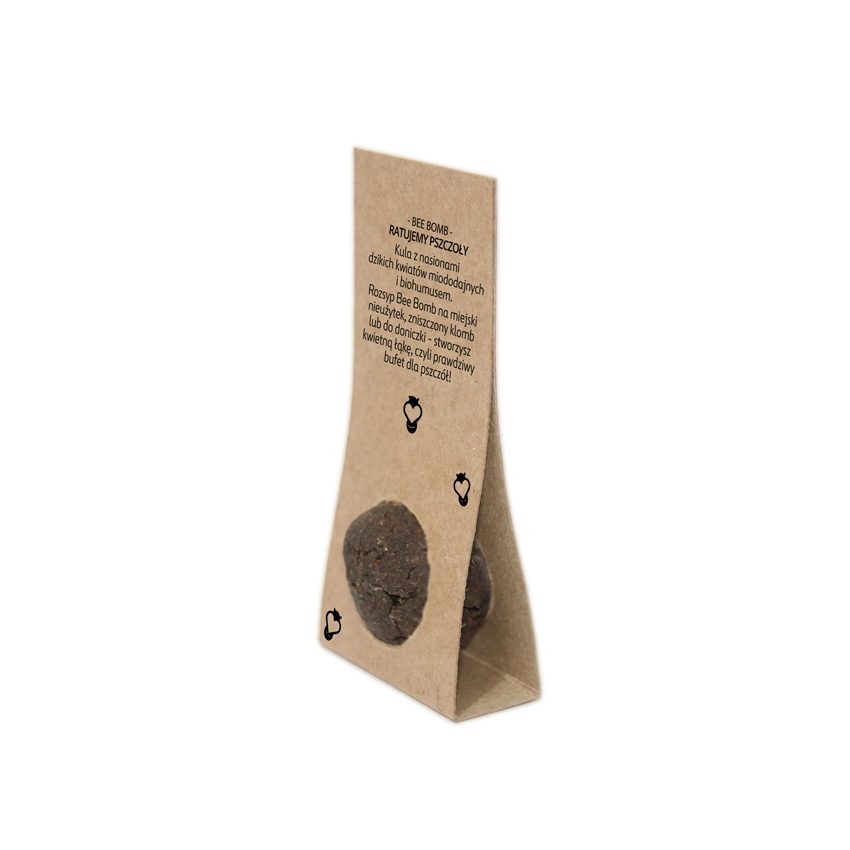
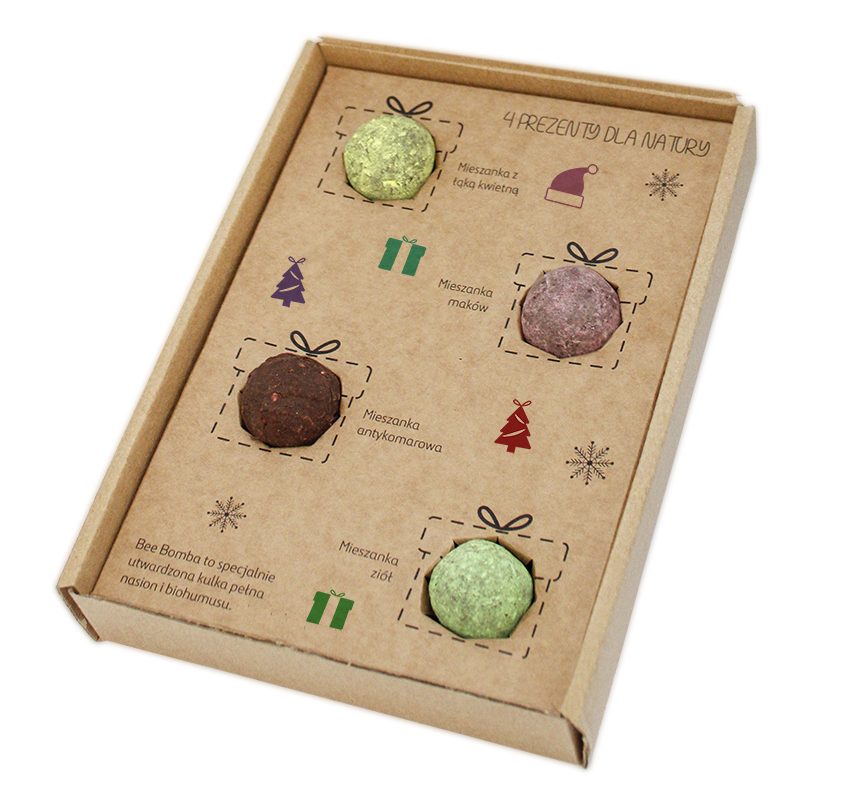
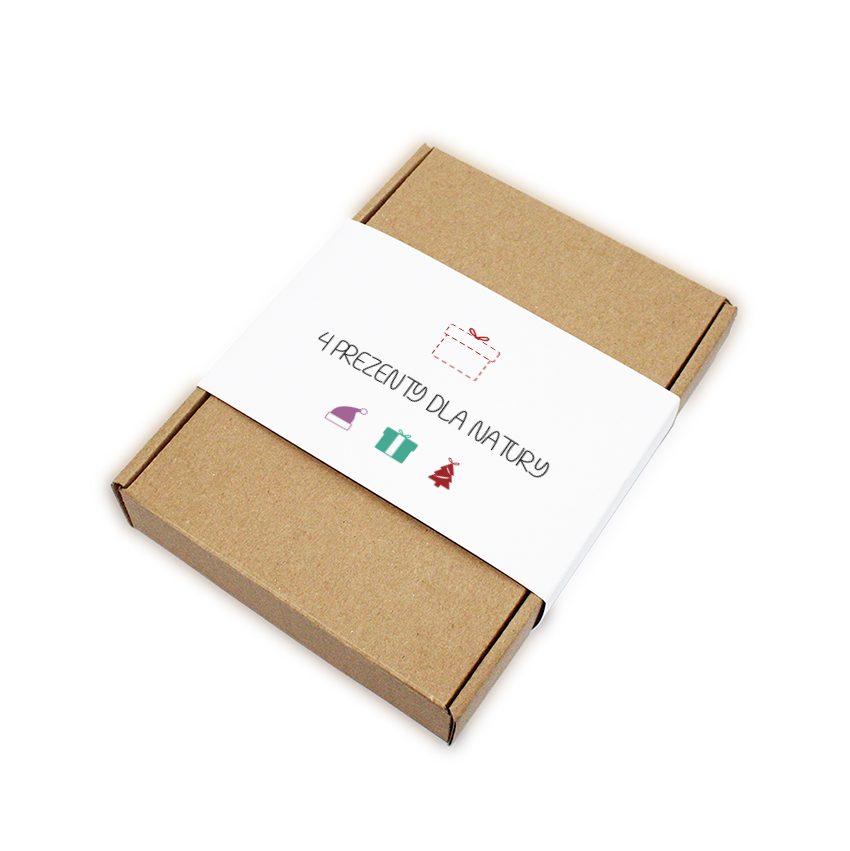
The packaging decides how expensive the gift feels and how much logo area there is. A cardboard sleeve is the thinnest and cheapest — good in a letter and in large quantities. A cardboard box gives more print area and stands upright on a desk. A jute bag feels the most natural to the touch. A glass jar is a gift not thrown away once the ball has been used. Four balls in a set is the choice when the gift must be a gift, not a gesture.
Coloured versions
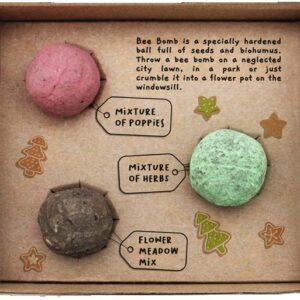
Besides the plain balls there are coloured ones, where the colour matches the plants inside the ball. You choose the mix — a good way to tie the gift to a brand colour.
Who it suits
For a campaign with an environmental message, a trade fair goodie bag, a client letter. It works especially well for companies that talk about sustainability and want the message tangible, not on a slide.
Personalisation
All packaging takes full-colour print with planting instructions on the reverse, on white eco paper or kraft paper.
What the recipient has to do
Sow in a pot or a suitable place where you have permission to grow plants. Follow the sowing and watering instructions on the packaging. Germination and flowering depend on the seed mix, temperature, light and moisture; no fixed outcome or germination time is guaranteed.
When and where to sow
Sowing season, light requirements and storage conditions depend on the seed mix. Before ordering, request the species list, manufacturer’s growing instructions and seed shelf life. Check that the plants suit the recipient’s growing location. Store as directed on the packaging.
Quantity and lead time
Smaller packs are cheaper and faster; the glass jar and the set of four need more handwork and a longer lead time. For a Christmas campaign, confirm the order in October.
Request a quote
Send us the quantity, the packaging you want and the deadline, and we will send the price.
Common questions
What is inside a seed ball?
A seed ball contains seeds of bee forage plants and humus. It makes a growing gift with instructions and branded packaging. The exact seed mix is confirmed for the selected product.
Which packaging should we choose?
The packaging decides how expensive the gift feels and how much logo area there is. A cardboard sleeve is the thinnest and cheapest and is good in a letter and in large quantities; a cardboard box gives more print area and stands upright on a desk; a jute bag feels the most natural to the touch; and a glass jar stays with the recipient once the ball has been used. A set of four is the choice when the gift must be a gift, not a gesture.
What does the recipient have to do?
Sow in a pot or a suitable place where you have permission to grow plants. Follow the sowing and watering instructions on the packaging. Germination and flowering depend on the seed mix, temperature, light and moisture; no fixed outcome or germination time is guaranteed.
When should a seed ball be sown and how long does it keep?
Sowing season, light requirements and storage conditions depend on the seed mix. Before ordering, request the species list, manufacturer’s growing instructions and seed shelf life. Check that the plants suit the recipient’s growing location. Store as directed on the packaging.
Can the balls be had in brand colours?
Besides the plain balls there are coloured versions, where the colour matches the plants inside the ball. You choose the mix, which is a good way to tie the gift to a brand colour. All packaging takes full-colour print on white eco paper or kraft paper.