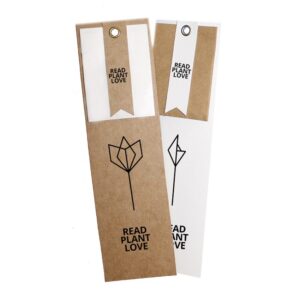
Handmade paper with seeds pressed into it. After soaking and planting in soil, your business card, thank-you card or promotional print grows into a plant. The only print material whose life begins where ordinary paper ends.
Four forms, one material
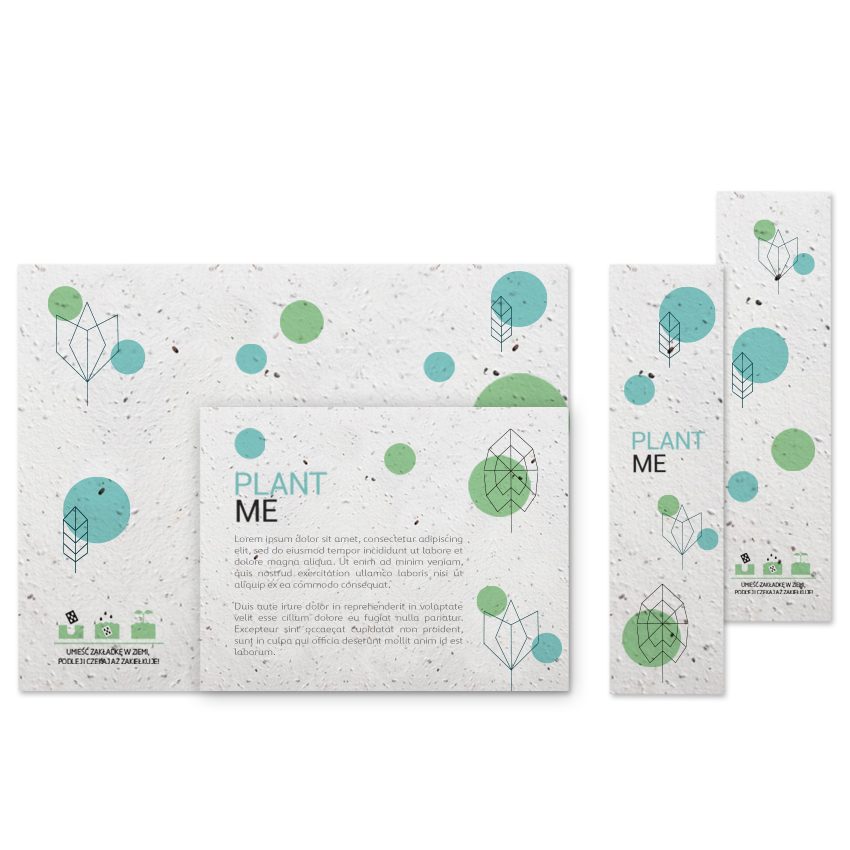
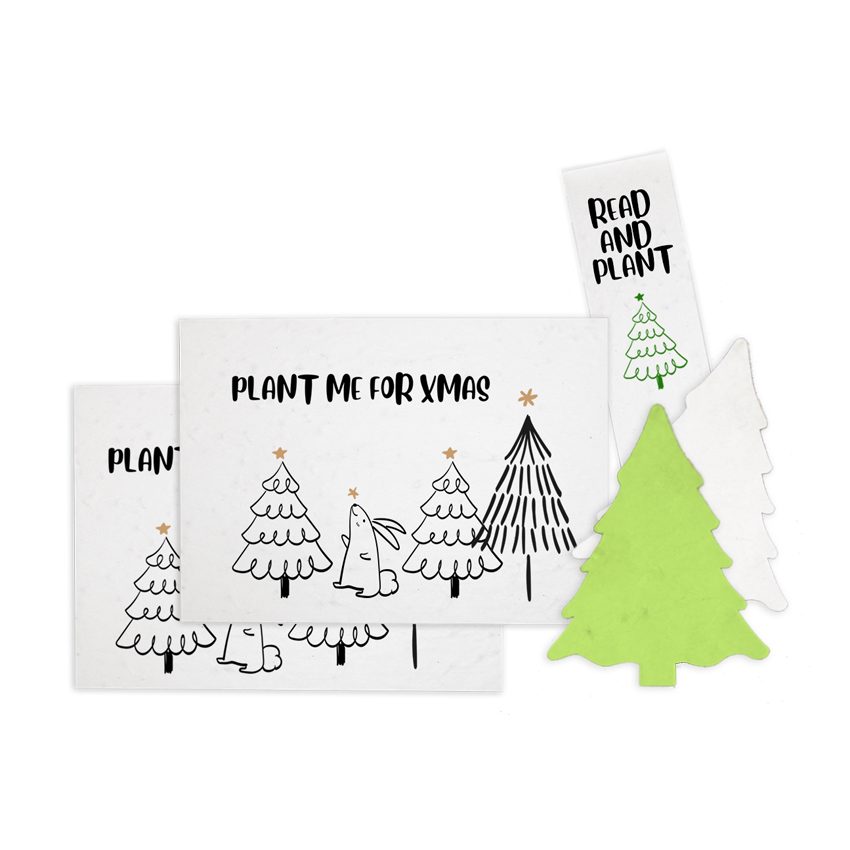
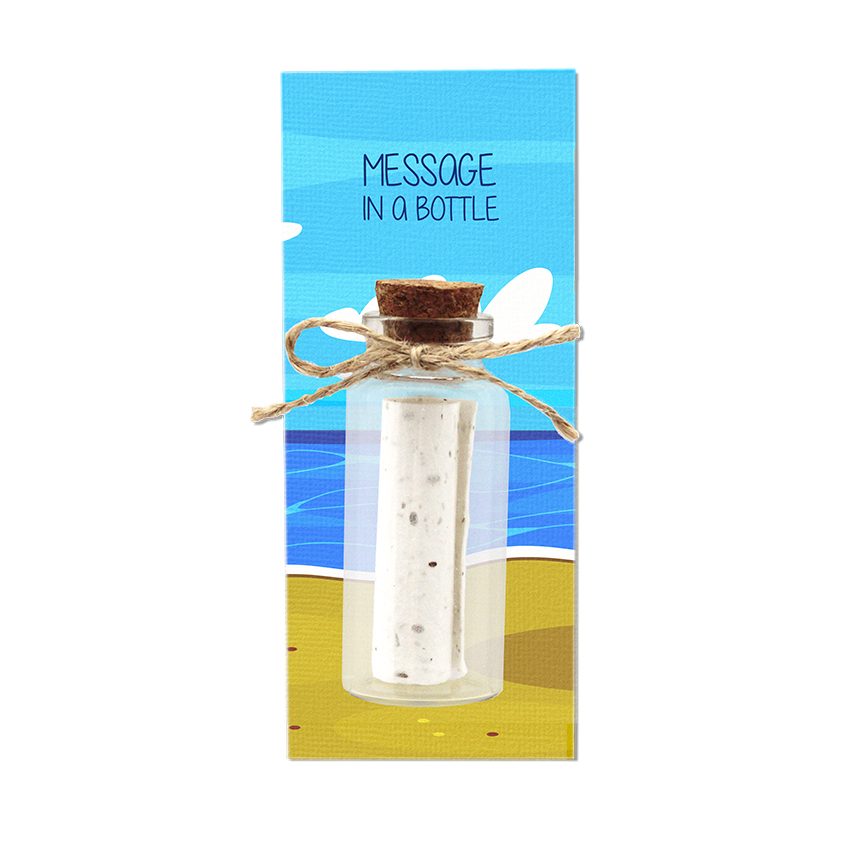
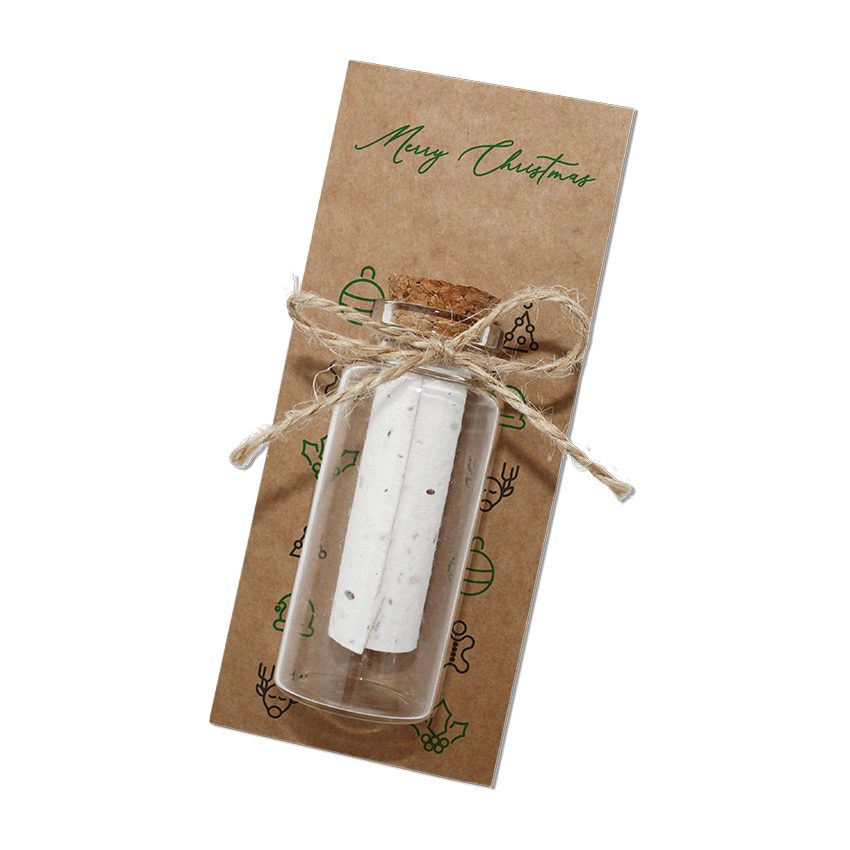
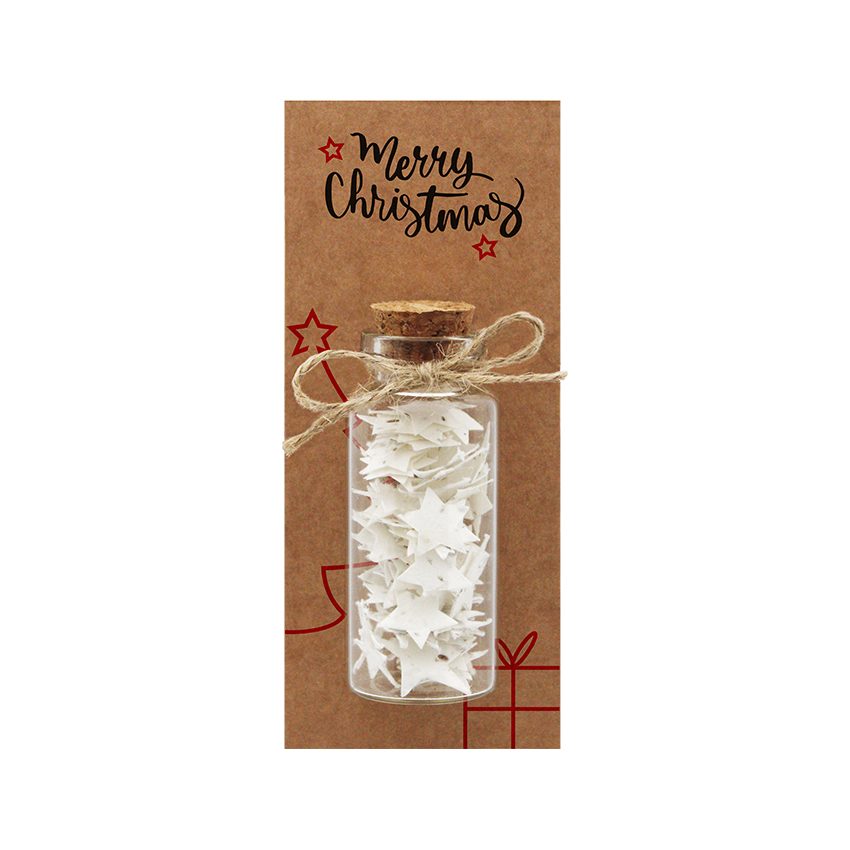
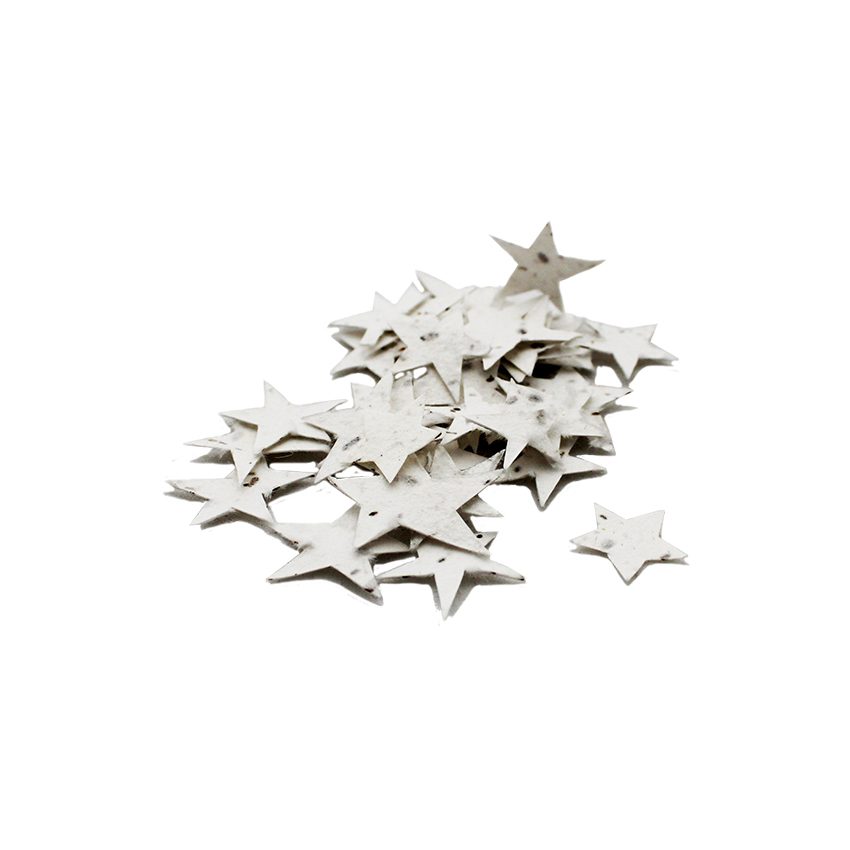
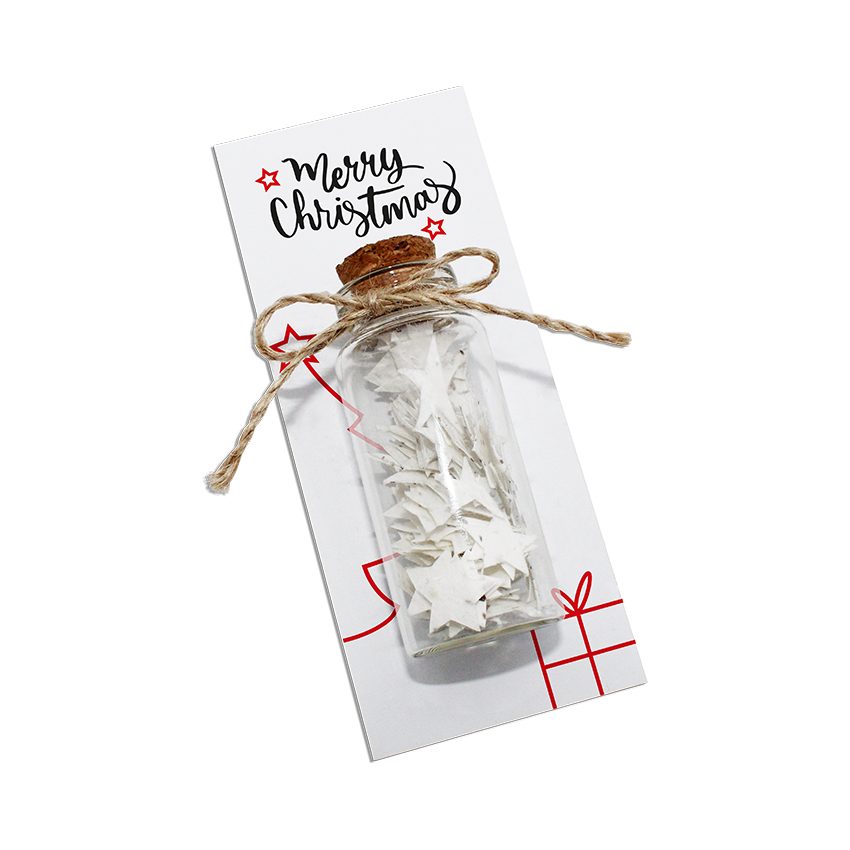
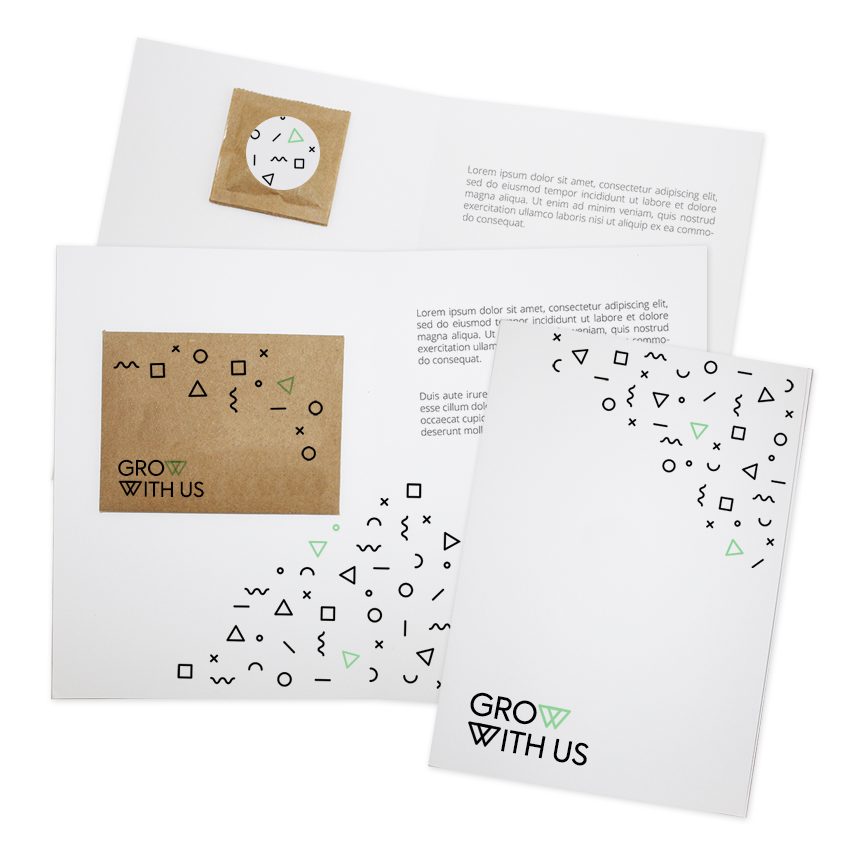
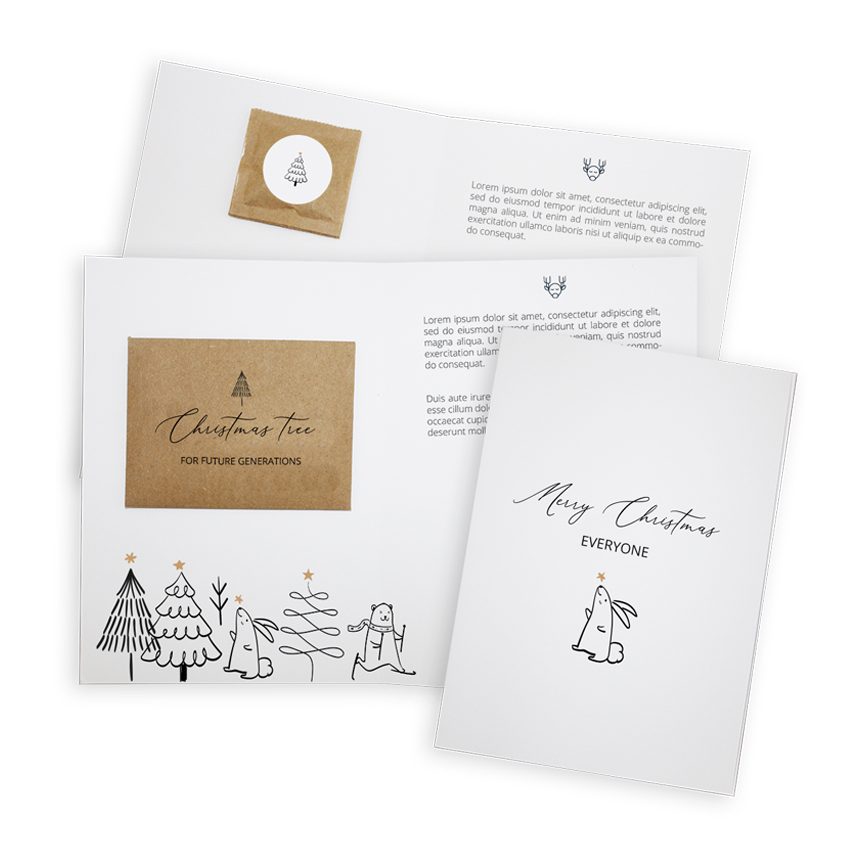
The paper sheet is the most flexible: A4 to A7 and DL, single- or double-sided full-colour print — business cards, thank-you cards, invitations. The roll in a vial is a message or QR code rolled into a vial; it reaches the recipient, because it cannot be left unopened. The confetti in a glass bottle is seed paper flakes — for event tables and celebrations. The print in an envelope is the simplest, cheapest way to slip a seed into a letter.
Material
The paper is handmade, about 180–200 g/m². You choose the seed mix yourself. Thick paper means softer print than on glossy stock — that is part of the product’s character, not a shortcoming.
Where it works
With a sustainability report, in a trade fair goodie bag, as a client thank-you card, as an event invitation. Especially where the message itself is about the environment — the paper proves the point.
What differs from ordinary print
Seed paper is not glossy stock. The surface is rough and the seeds visible — print comes out softer and colours duller than on coated paper. This is not a printing error but the character of the material, and exactly what makes it recognisable. If the design needs sharp detail or small type, think it through in advance.
What the recipient must do
The paper is soaked, laid on soil, covered with a thin layer of soil and kept moist. Germination usually takes a couple of weeks. Planting instructions are part of the product — without them a large share of the gifts never gets grown.
Forms and sizes
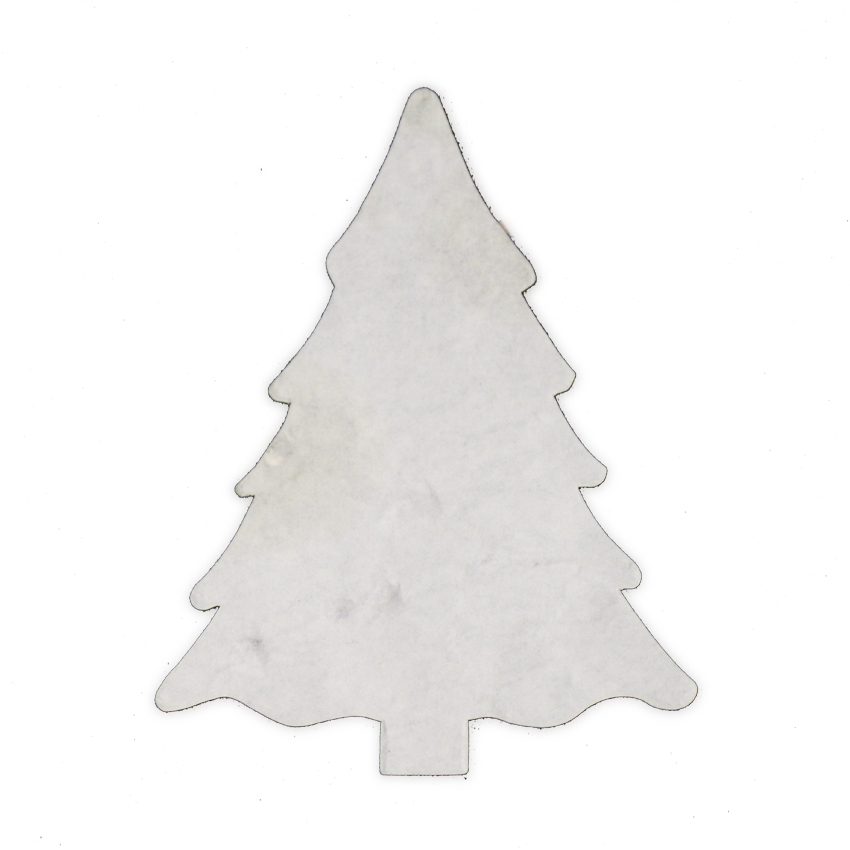
Standard sheet formats are A4, A5, A6, A7 and DL envelope size. From these you can cut a business card, invitation, thank-you card or hanging tag. The roll, confetti and envelope print are ready-made forms, where only print and seed mix change.
Quantity and lead time
Handmade paper means a large print run takes time. If the print is tied to a specific event, confirm the order at least a month ahead — especially in autumn, when all the Christmas projects move at once.
Request a quote
Tell us the form, the size and the number of pieces, and we will send a quote.
Common questions
In which forms can seed paper be ordered?
There are four forms: the paper sheet (from A4 to A7 and DL, single- or double-sided full-colour print — business cards, thank-you cards, invitations), the roll in a vial (a message or a QR code rolled up), the confetti in a glass bottle and the print in an envelope. The roll, the confetti and the envelope print are ready-made forms, where only the print and the seed mix change.
What is this paper like?
The paper is handmade and about 180–200 g/m² thick, with the seeds pressed into it. You choose the seed mix yourself.
Will the print be as sharp as on ordinary paper?
No. Seed paper is not glossy paper: the surface is rough and the seeds are visible, so the print comes out softer and the colours duller than on coated paper. This is not a printing error but the character of the material. If the design needs sharp detail or small type, it is worth thinking this through in advance.
What does the recipient have to do with seed paper?
The paper is soaked, placed on soil, covered with a thin layer of soil and kept moist. Germination usually takes a couple of weeks. Planting instructions are part of the product, because without them a large share of the gifts never gets grown.
How early should the order be placed?
Handmade paper means that a large print run takes time. If the print is tied to a specific event, it is worth confirming the order at least a month in advance — especially in autumn, when all the Christmas projects are moving at once. Use the form on this page to tell us which form, which size and how many pieces you would like, and we will send a quote.