

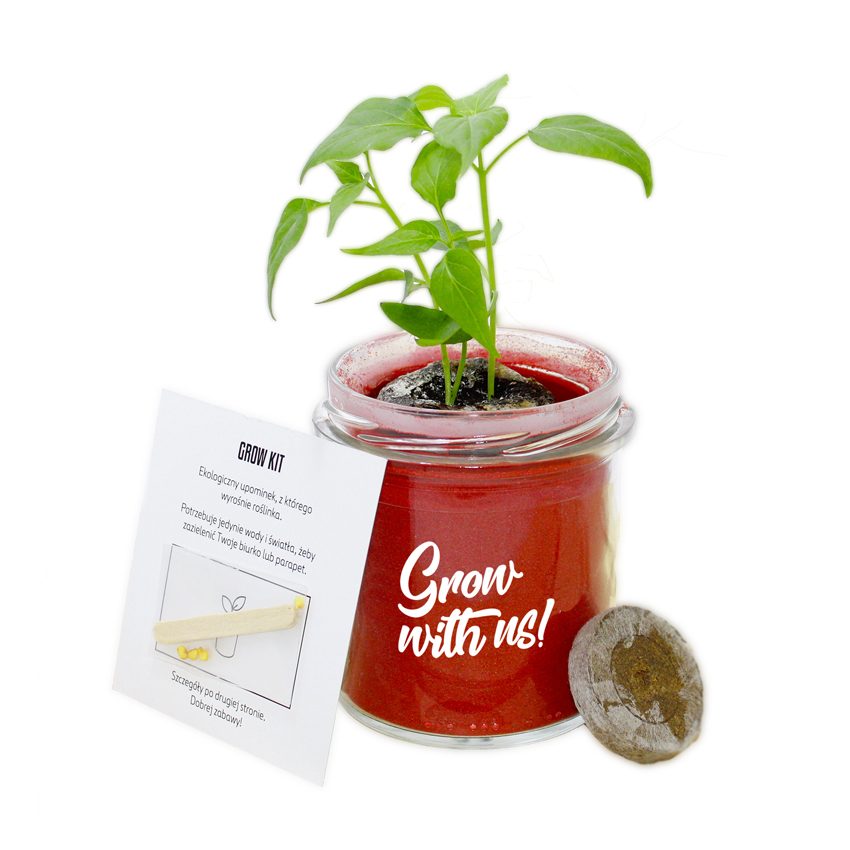
A gift either stays or disappears fairly early on — usually the first minute, when the recipient picks it up, decides it. In this post we look at what makes the difference between a gift that is kept and one that travels to a drawer and from there to the bin, and we go through seven specific options together with the people each of them genuinely suits.
Three traits that decide a gift’s fate
Gifts that stay with people almost always carry at least one of these three traits.
- It has a place. An item with no place of its own on a desk, a windowsill, in the kitchen or in a bag ends up in limbo straight away. A gift that has a clear “this goes here” survives the first tidy-up.
- You can do something with it. A gift that calls for an action — opening, watering, using — ties the recipient to it. That action is the reason the item is still remembered a week later.
- It does not demand an immediate decision. If a gift is the kind of thing you have to deal with right away or it goes to waste, it creates an obligation. A gift that can wait makes nobody feel guilty.
The opposite list is shorter: what gets thrown away are things that do nothing, fit nowhere and whose only content is somebody else’s logo.
Why an “eco material” alone saves nothing
A common assumption is that if the material is environmentally friendly, the gift is already green. In practice that is half of the solution. Something made of eco paper that nobody uses is still something nobody uses — the material only changes what happens after it is thrown away, not whether it is thrown away.
A green corporate gift is really two decisions at once: what it is made of and whether it gets used. The second decision is the one that determines whether the money bought anything. That is exactly why gifts based on seeds and plants work well — they have a built-in action that gives them a life beyond the moment of giving.
Seven options and who each one suits
Below are our categories, together with the situation in which each of them genuinely starts to work.
1. Growing kit
Growing kits suit situations where the gift is handed to a person rather than to a crowd: a welcome for a new employee, a thank-you for the team, something to take along to a client meeting. Every kit contains several seeds and a short set of instructions under the lid, so the recipient does not have to look anything up. A sealed kit keeps on the shelf for up to several years and the process only starts when it is opened and water is added — which is also why this gift obliges nobody. If you want the result to come quickly, bear in mind that germination takes from a few days up to about twenty days, and herbs such as thyme are the fastest.
2. Seed balls
Seed balls are the option for larger quantities — a trade show, a conference, an open day. They are small, light and demand neither care nor skill from the recipient. If the gift is handed out over a counter to passers-by and you have no idea who will get it, this is a safer choice than something that requires space and attention at home.
3. Seed paper and seeded print products
Seed paper and seeded print products solve a different problem: the invitation, card or covering letter that would otherwise go straight into the paper bin. It works well when you need to print something anyway — a birthday invitation, a thank-you card, a note to put inside the packaging. The gift and the accompanying message are then one and the same thing.
4. Pencils with seeds
Pencils with seeds are a good choice for training courses, schools and events where the gift has to go round a lot of people and be usable straight away. A pencil can be engraved, and the engraving lasts for the whole life of the pencil — unlike a sticker that is gone within the first week. Pencils, balls and seed paper all belong to the same family and are worth looking at together: the whole seed gift range is on one page.
5. A live plant or a spruce with a logo
Live plants and spruces suit a long-standing client or a partner you know and whose office you can picture. This is a gift that stays visible in the room and that other people notice too. In return it is the most seasonal choice and the one that demands the most careful timing — living goods will not tolerate months of waiting in a warehouse.
6. Eco office supplies
Eco office supplies are the choice when you want your logo on someone’s desk every day. An office item is not a surprise gift, but that is precisely why it has a long life: it does not depend on mood, it depends on habit. It suits a client you are in regular contact with, and a team that spends most of its time at a desk.
7. Eco spa, relaxation and food gifts
Eco spa and relaxation products and eco food gifts work where you do not know the recipient particularly well. None of them assumes an interest, a hobby or spare space — they simply get used up. As a year-end thank-you or for a partner you have met twice, this is a low-risk choice.
How to decide between two good options
If two candidates are left on the list, four questions help:
- How large is the quantity? A small quantity allows a more personal gift; a large quantity calls for something that also works when the recipient is a stranger.
- Is the gift handed over or posted? Something sent by post has to be light and survive the journey; something handed over in person can be larger and an awkward shape.
- Is the recipient at the office or at home? The office suits things that have a place on a desk; home suits things that do not demand action in the middle of the working day.
- Does the gift have to do something immediately, or may it wait? An event gift has to land on the same day; a year-end gift can quite happily start germinating in January.
Personalisation that does not spoil the item
The job of a logo is to say who the gift came from — not to be the main character of the gift. We use full-colour printing on eco paper or kraft paper, engraving on wood and on pencils, labels and box sleeves. Engraving and labels are usually the ones that stay understated and last a long time.
Allow for the quantity thresholds as well, because they affect the choice more than it first seems: full-colour printing on the box starts from 500 pieces and direct printing on the cup from 1000 pieces. With a smaller quantity the personalisation moves to a label, a sleeve or an engraving — and the result is often more restrained than a large printed surface.
Where to go from here
The quickest way forward is to tell us how many gifts you need, who they are going to and by what date. Our sales are enquiry-based, because the price depends on the quantity and the printing — there is no point in inventing a general price list. Send us an enquiry with the quantity and the deadline; the first digital design proof is free, without obligation and ready within one day, so you see your logo on the product before you decide anything.